LEGAL2026 & CALD-pseudo 2026 — a post-workshop report
Many things have changed in the two years have passed since the first edition of the workshop on Computational Approaches to Language Data Pseudonymization, but our excitement and anticipation as the minutes counted down to the opening of the Joint Workshop on Legal and Ethical Issues in Human Language Technologies (LEGAL2026) and Computational Approaches to Language Data Pseudonymization, Anonymization, De-identification, and Data Privacy (CALD-pseudo 2026) were unchanged. For this edition, the Mormor Karl team joined forces with both some of the members of the CLEANUP project, as well as the organizing team behind the LEGAL workshop series.
This year’s workshop, hosted at LREC 2026 in Palma de Mallorca (Spain), was divided into two thematic tracks for the two constituent workshops, with a total of 7 oral presentations, 5 posters, 1 introductory lecture and 2 invited talks! Despite starting early and finishing late, we had a solid attendance throughout the workshop and at the subsequent workshop dinner.
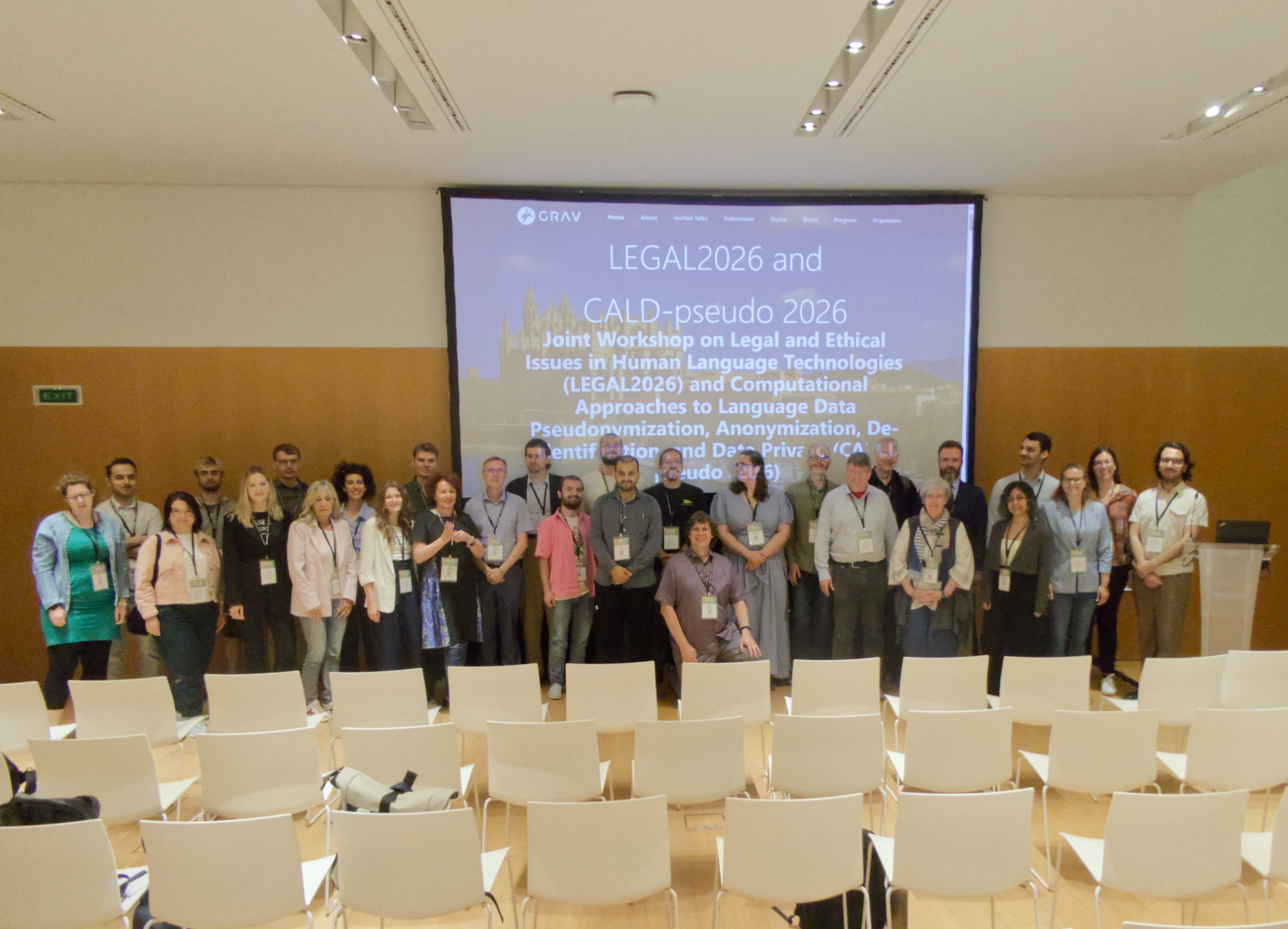 Image taken by the conference center staff
The first half of the day was devoted to LEGAL; kicking off with Paweł Kamocki’s traditional introductory lecture about the recent developments in law related to language resources, featuring 4 oral presentations, and the wonderful invited talk on copyright by Maja Bogataj Jančič.
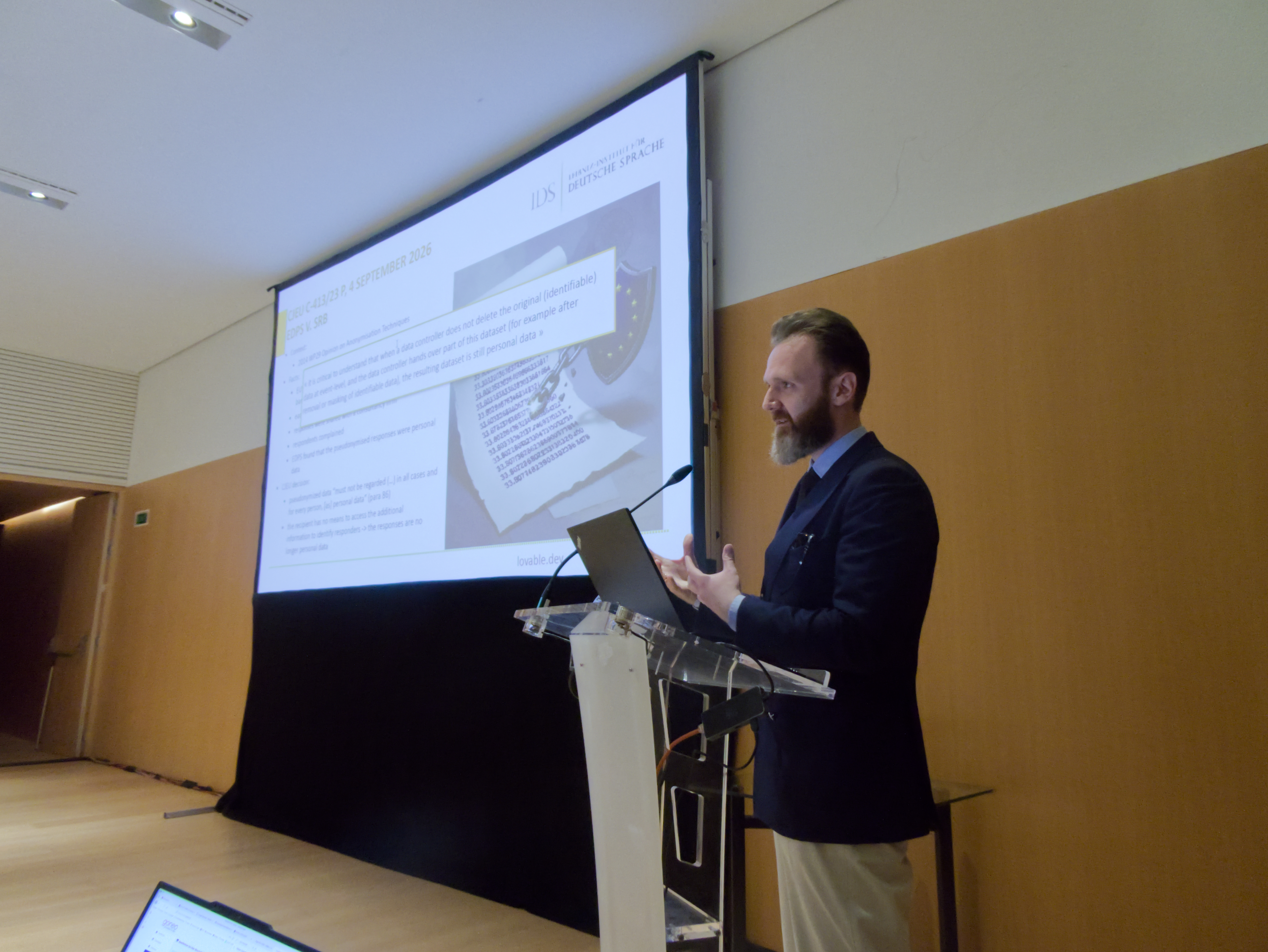 Image taken by Maria Irena Szawerna
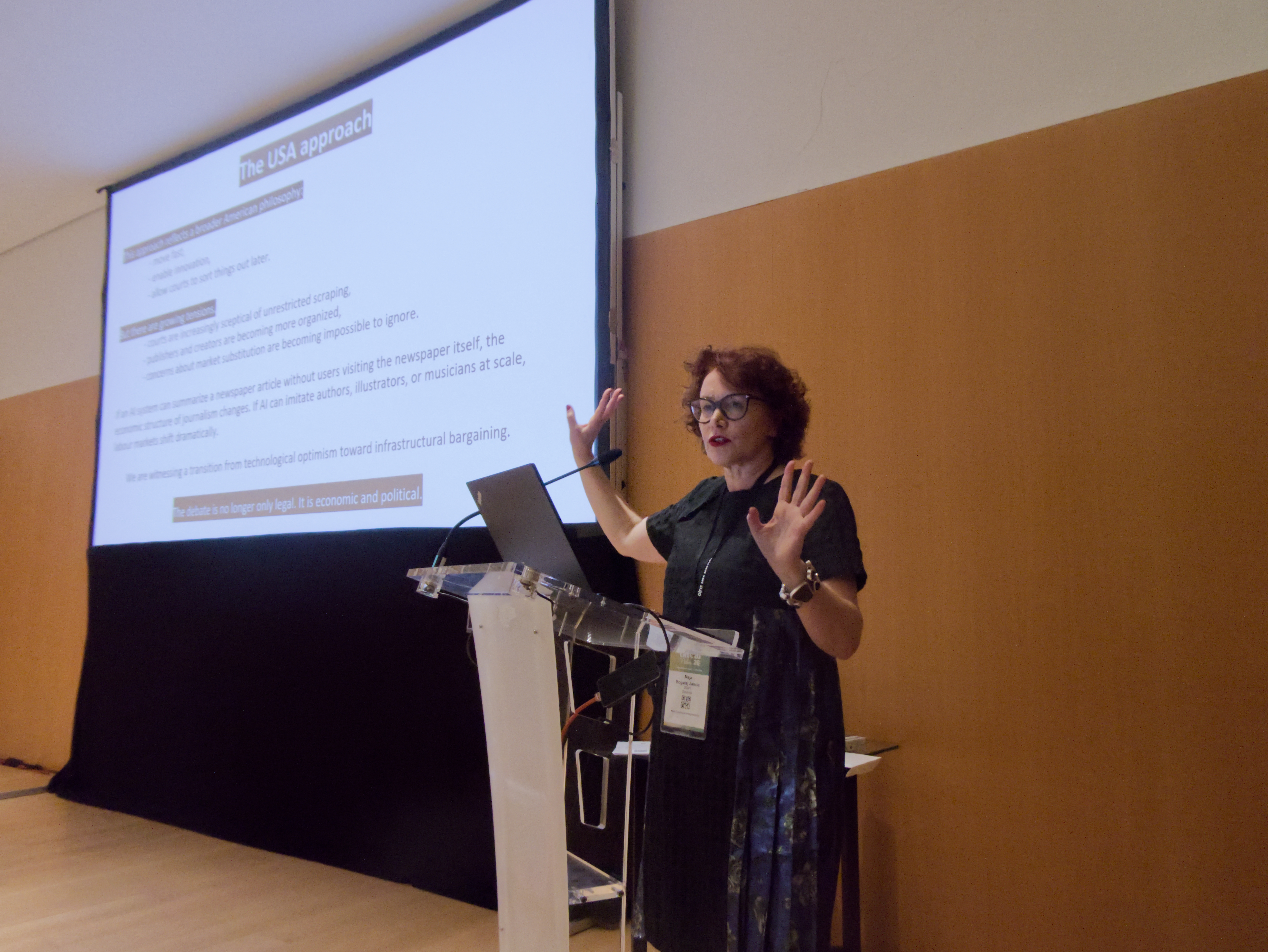 Image taken by Maria Irena Szawerna
After lunch the program shifted towards de-identification, starting with Ivan Habernal’s inspiring talk with a somewhat ominous title (but a happy conclusion nonetheless!) and continuing with 3 more oral presentations. After a short coffee break we all moved to the poster area to hear about 2 more CALD-pseudo and 3 more LEGAL papers.
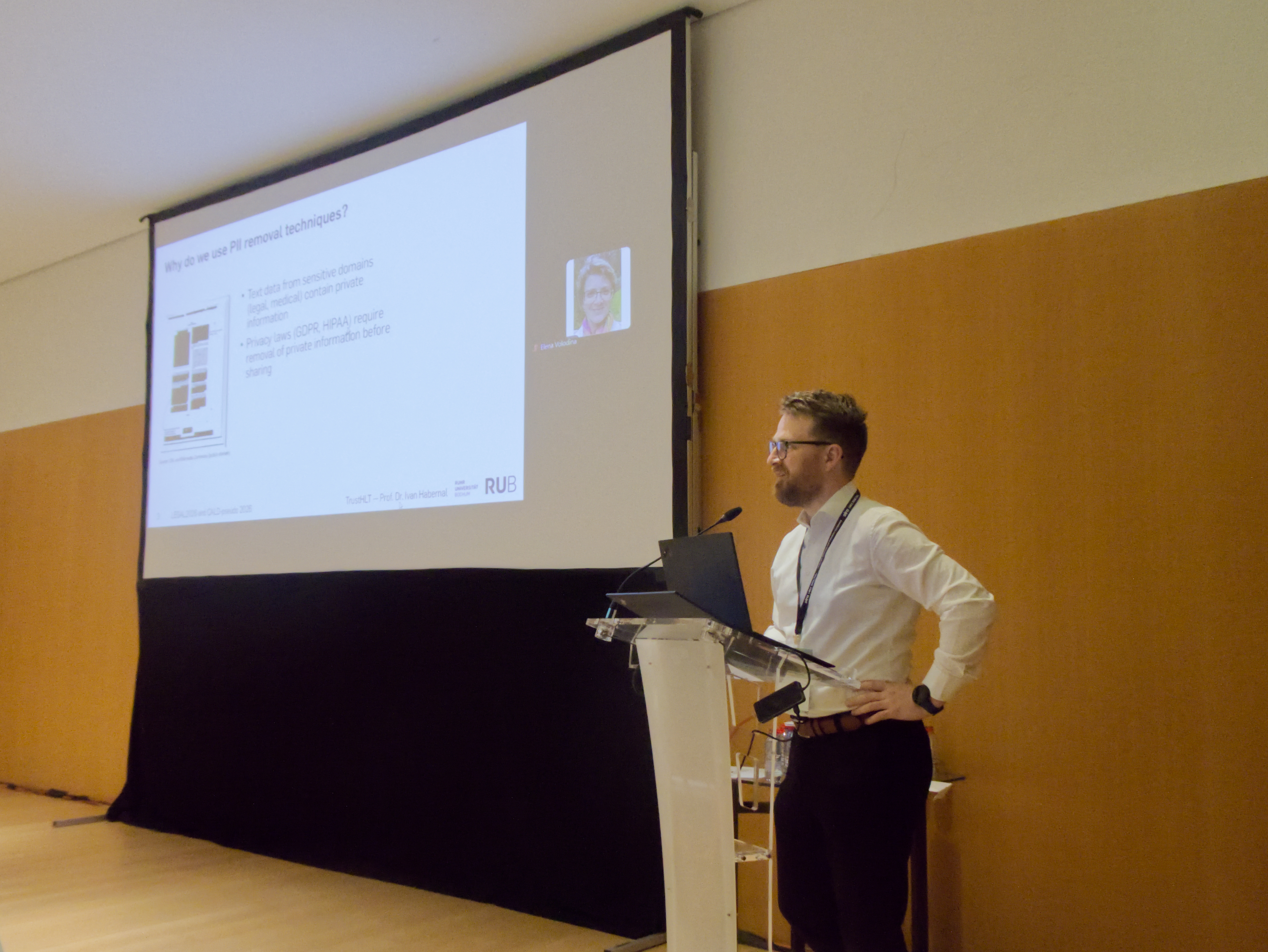 Image taken by Maria Irena Szawerna
It was very exciting for us all to see both familiar and new names among the submission authors, indicating a growing community of people interested in language data de-identification and legal and ethical issues in human language technologies!
We are looking forward to both future editions of the workshop(s) and the future publications from our authors, many of whom presented also at the main LREC conference.
We extend our thanks to all of the organizers and reviewers that have made this workshop possible, LREC2026 and the workshop chairs who patiently oversaw the process, as well as to those who have submitted and those who have presented at the workshop, and, finally, to our audience — it truly is a team effort!